Linear vs Centre Shower Drain: What Each One Does to the Floor
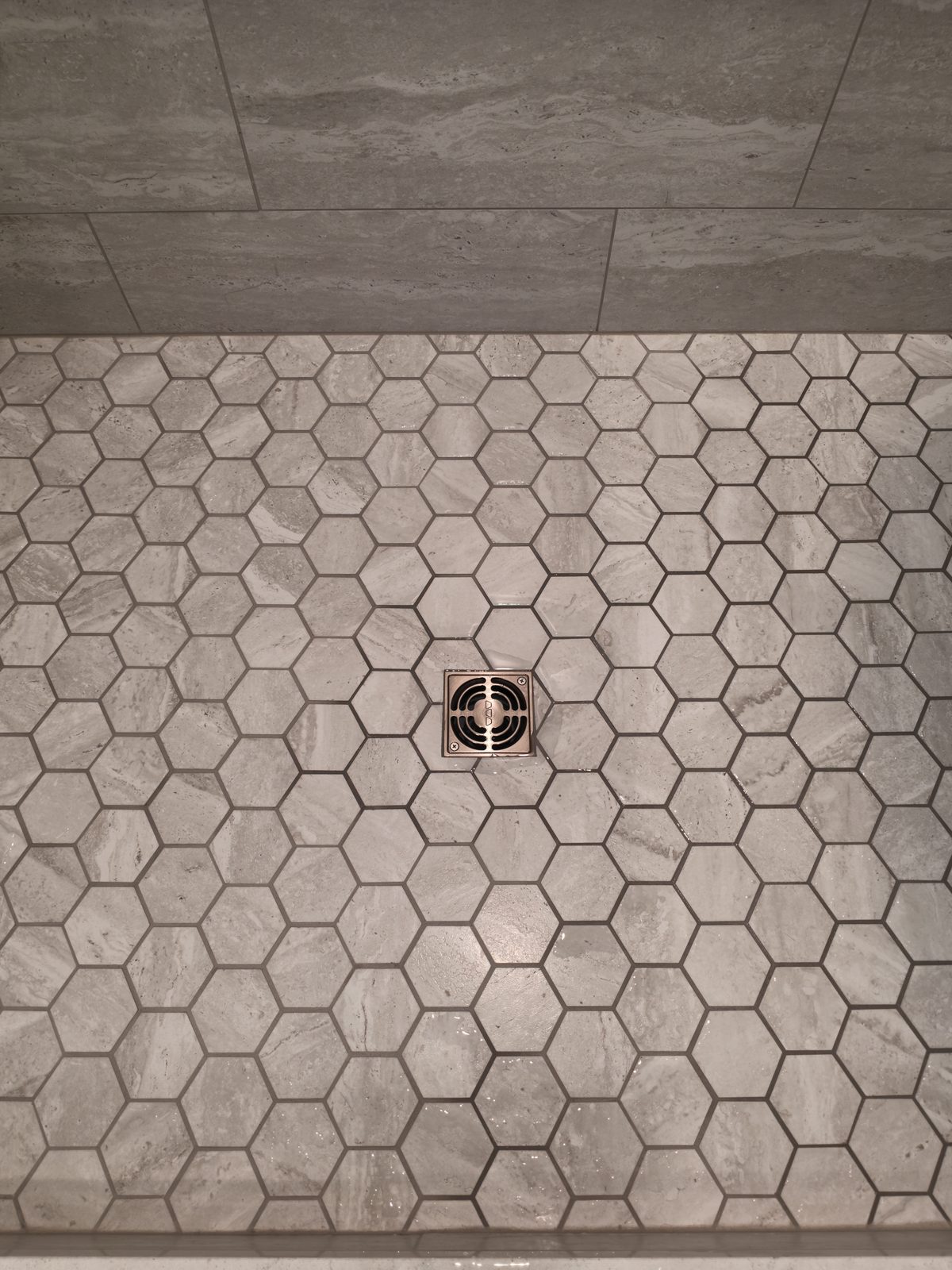
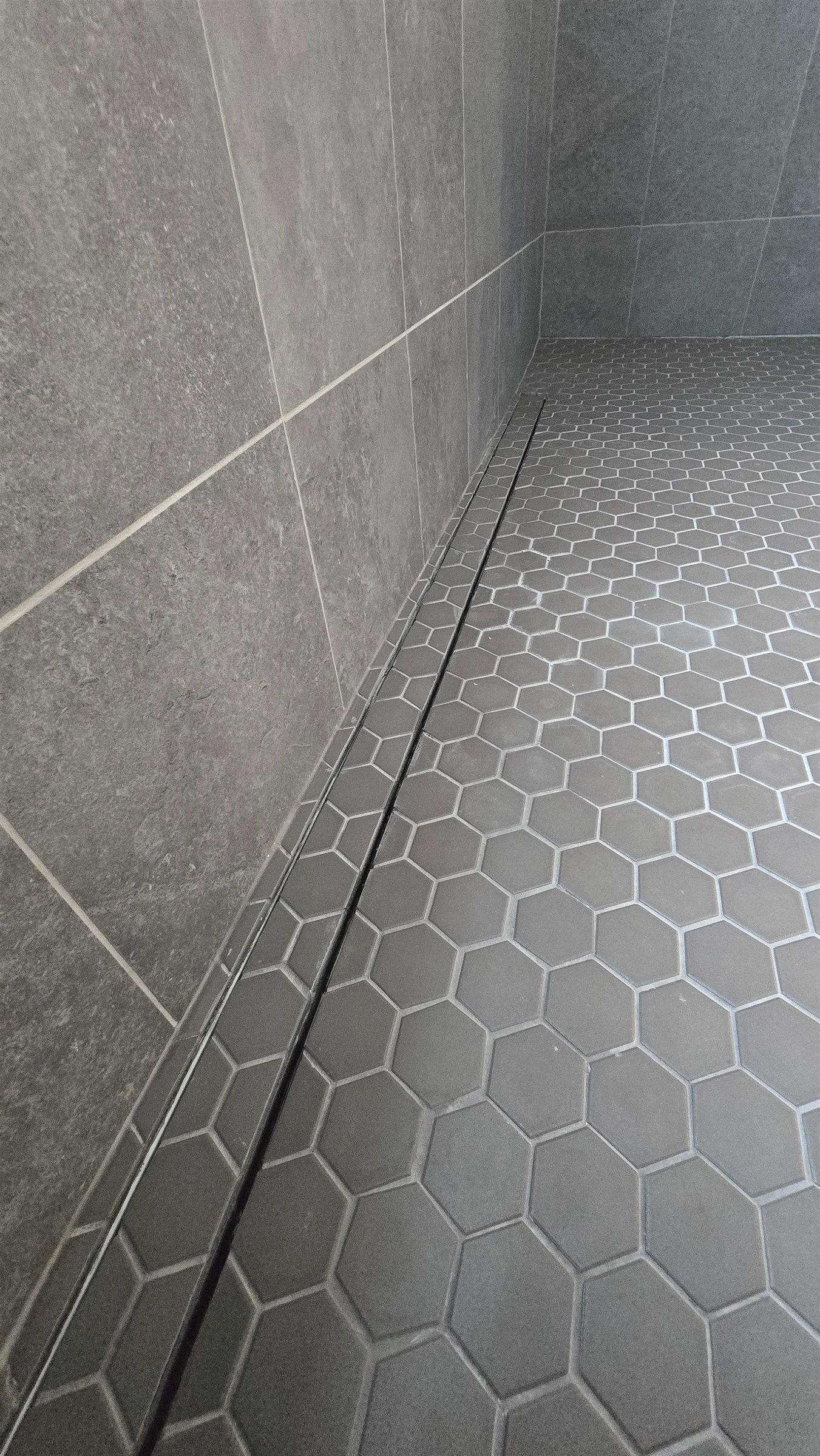
Choosing between a linear and a centre shower drain looks like a style question and is really a tile question. The drain position decides how the pan has to slope, and the slope decides how big the tile in that pan can be. Both kinds, photographed in Hamilton County bathrooms we built.
A centre drain requires the shower floor to fall towards a single point from every direction, which means the pan has to be made of small tiles or mosaic that can follow a compound slope. A linear drain sits at one edge, so the floor falls in a single plane like a ramp, and large-format tile can be used in the pan. Neither drains better. The real decision is what you want the floor to look like.
Every shower floor slopes to its drain. What changes between a centre drain and a linear drain is the shape of that slope, and the shape of the slope decides what tile can be laid on it.
A centre drain sits in the middle of the pan, so the floor has to fall towards it from all four sides. That is not one slope, it is four planes meeting at a point, with diagonal valleys running from each corner. Tile has to follow that, and a large rigid tile cannot follow a surface that changes direction underneath it. So pans with centre drains use small tile: mosaics, hexagons, penny rounds. The grout joints are what let the surface bend.
A linear drain sits along one edge — usually the back wall or the entry. The floor then falls in a single direction, like a very shallow ramp, and a single plane is something a large tile can sit on flat. That is the whole reason people choose linear drains: it is the only way to run the same large-format tile through the shower as the rest of the bathroom with no change of scale at the opening.
So the question to ask is not which drains better. Both drain fine. It is whether you want the shower floor to read as a different surface from the bathroom floor, or as the same one continuing.
There is a maintenance difference worth knowing. A mosaic pan has a great deal of grout, and grout in a shower floor is the thing that needs sealing and eventually attention. A large-format pan over a linear drain has very little. Against that, a linear drain has a longer channel and a removable grate that needs cleaning out rather more often than a round centre drain does, because it catches everything along its whole length.
Cost runs the same way as complexity. A linear drain unit costs more than a centre drain, and it usually has to be positioned with more care because the slope has to run true across the whole pan in one direction. A centre drain is more forgiving to install and the mosaic that goes with it is usually cheaper per square foot than large-format porcelain. The difference is not large in the context of a bathroom, which is why this is normally decided on looks.
One thing that is not a factor: curbless. A curbless shower works with either. Both of the curbless pans in our portfolio use a centre drain with a mosaic, and the two are frequently assumed to go together because linear drains are marketed alongside curbless entries. They are independent decisions.
Frequently Asked Questions
Is a linear drain better than a centre drain?
Neither drains better. A linear drain lets the shower floor fall in a single plane, which makes large-format tile possible in the pan; a centre drain needs the floor to fall from four directions, which requires mosaic or small-format tile. The choice is about how you want the floor to look.
Can you use large tiles in a shower floor?
With a linear drain, yes, because the floor slopes in one direction and a large rigid tile can sit flat on a single plane. With a centre drain it is not practical — the surface changes direction under the tile, and small tiles with grout joints between them are what allow the floor to follow it.
Does a curbless shower need a linear drain?
No. The two are often marketed together but they are independent decisions. Both of the curbless showers in our portfolio use a centre drain with a mosaic pan.
Which drain needs less maintenance?
It depends on what you mind doing. A large-format pan over a linear drain has far less grout to look after than a mosaic pan. A linear drain's grate catches hair and debris along its whole length and needs lifting and cleaning more often than a round centre drain.
Where should a linear drain be positioned?
Either against the back wall or at the entry. Against the back wall the floor falls away from the opening, which keeps water further inside the shower; at the entry it intercepts water before it reaches the opening, which is sometimes preferred on a curbless shower. Both work, and the slope has to run true across the whole pan either way.
Ready to start your project?
Get a Free Estimate